

Anerythristic Corn Snakes for sale in the UK
Anerythristic strips the red and orange from a corn snake, leaving black, grey and brown that shift as it matures. It is the grey base under Snow, Ghost and Ice, and a het looks like a normal, so buy from records you trust.
- Visuals
- £195
- 1 for sale
- Hets
- £100
- 3 for sale
Anerythristic corn snakes available now
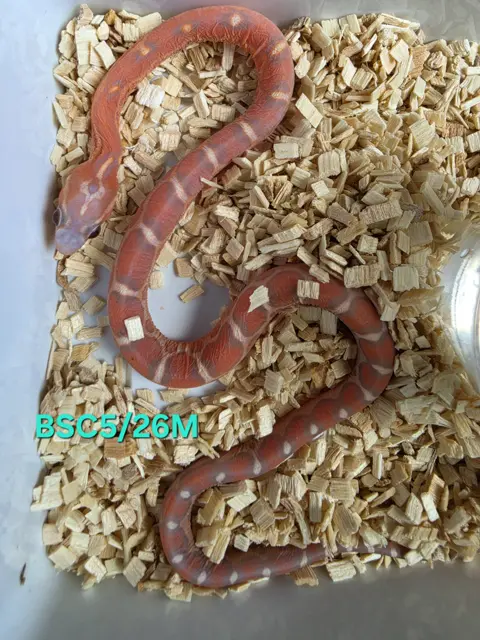
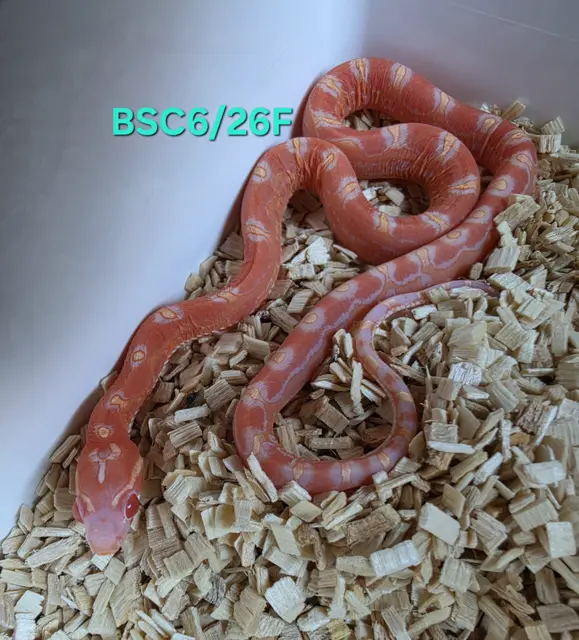
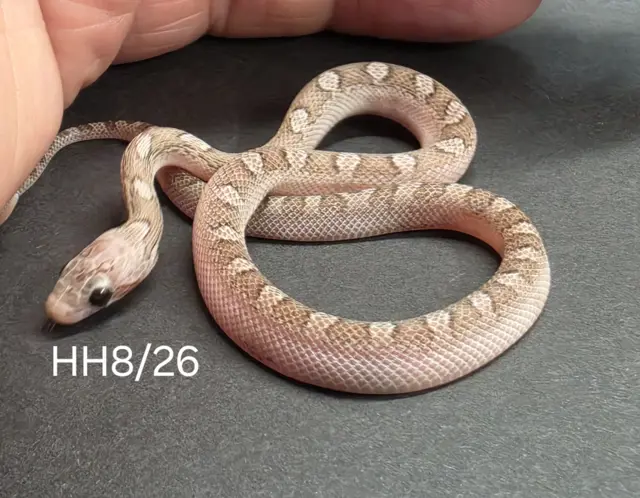

About the Anerythristic gene
A corn snake's red and orange pigment is switched off by Anerythristic, which leaves a pattern of grey, black and white. Because many morphs with grey-toned combinations are built on it, including Ice, Snow and Ghost, breeders keep it in wide circulation.
Appearance
The snake is born with a near-white background and stark black saddles. These saddles keep darker than the ground colour as the snake grows and the contrast softens into shades of grey. Sometimes a little black or white is worked through the pattern. Females tend to stay grey with black markings, but males more often turn an earthy brown. As they mature, most pick up a mustard-yellow wash along the neck and jaw. This is absent at hatching and comes from diet. The belly keeps the black-and-white chequered pattern typical of the species. The eyes have a black pupil in an iris that is silver, charcoal or grey.
Genetics
Because Anerythristic is recessive, a Het Anerythristic, 50% Het Anerythristic, 66% Het Anerythristic or Pos Het Anerythristic looks like a normal corn snake. The gene is only shown by a visual. The hobby also calls it Anery A. It is at a different locus from Charcoal, which is sometimes labelled Anery B. Breeders confirmed these are separate genes with a similar grey look by crossing the two to get normal-looking double hets, not a visual. Anerythristic has no complex of its own. Starting from it are many combination morphs, including Snow, Ghost, Ice, Granite and Pepper. Each one adds a second gene on top of the grey base. Dr. Bernard Bechtel first produced it in 1975.