

Yellow Belly Royal Pythons for sale in the UK
A royal python with the Yellow Belly morph has paler flames on its sides, a richer colour, and a clean belly with a checkered edge. One copy can pass for a normal, and a genetic test is available. Two copies of the gene result in the near-white Ivory.
- Visuals
- £20
- 21 for sale
All Yellow Belly royal pythons
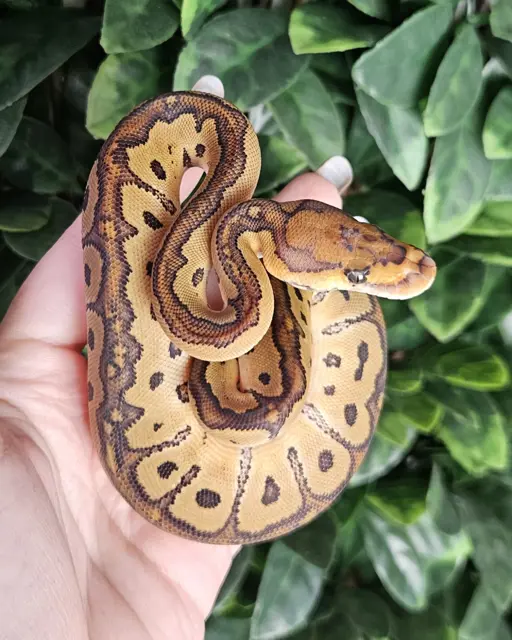
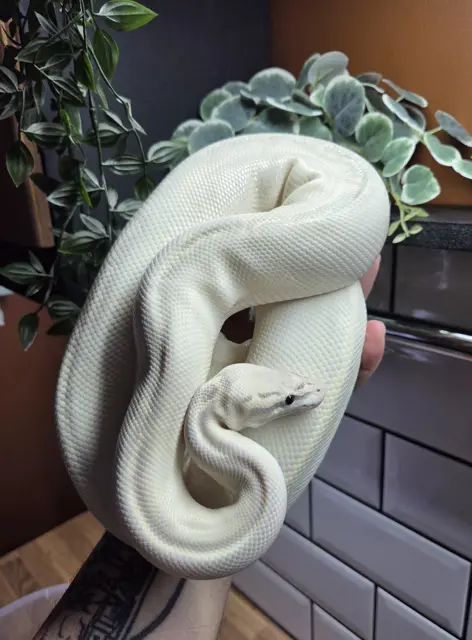
hypo pastel gravel yellowbelly
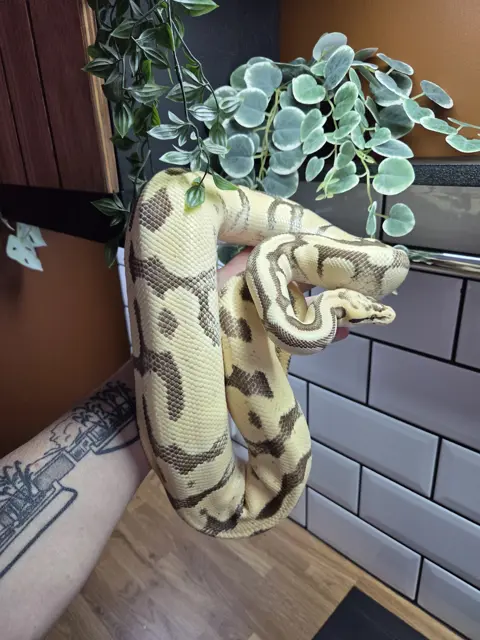


Amplify YB het Clown


Amplify ODYB Clown

About the Yellow Belly gene
Yellow Belly is a subtle gene that does most of its work in combination. A single-copy royal python (ball python) looks like a normal with the colour turned up, and two copies make the Ivory, a pale, near-patternless snake with a yellow stripe down the spine. The gene turns up in dozens of named combos.
Appearance
Unless you are looking for it, a Yellow Belly is easy to miss. Because the ground colour is richer than a normal, the dark pattern looks almost tan and pale flames climb from the belly into the gaps between the alien heads. The belly is usually clean and bordered by motley or checkered scales where it meets the sides, although some animals show spotting. The belly is not necessarily yellow despite the name. A thick stripe or beading usually ends the tail, and many have a light headstamp toward the back of a tan crown. Each of these traits varies from animal to animal.
The hobby knows the Super Yellow Belly as Ivory. This is a creamy white snake with a yellow stripe down the back and almost no pattern.
Genetics
The Yellow Belly gene is incomplete dominant, though the hobby often lists it as "co-dom". If you have two copies, it is a Super Yellow Belly, which is sold as Ivory. This gene is part of the Super Stripe complex and is allelic with Specter, Spark, Gravel and Asphalt. Each pair with Yellow Belly has a unique name: Super Stripe with Specter, Puma with Spark, Freeway with Asphalt and Highway with Gravel. Other names for the same gene include Goblin and Orange Belly. Bling Yellow Belly is also the same gene under the NERD line, and it is listed separately with its two-copy form, Super Bling Yellow Belly. A single-copy animal can be hard to tell from a normal by eye, and a genetic test is available. In 2023, a study in G3 linked the gene to frameshift deletions in EDNRB2, but the paper was retracted and replaced that same year to correct the names it gave the endothelin receptor genes. The gene was proved by Amir Soleymani in 1999, and the first Ivories were hatched by The Snake Keeper in 2003.