

Enchi Royal Pythons for sale in the UK
The Enchi morph moves a royal python towards orange and gold, featuring chocolate markings and a cleaner, reduced pattern. Two copies of the gene take this even further. Because the colour builds as the snake matures, a young Enchi can look close to a normal.
- Visuals
- £125
- 21 for sale
Enchi royal pythons available now
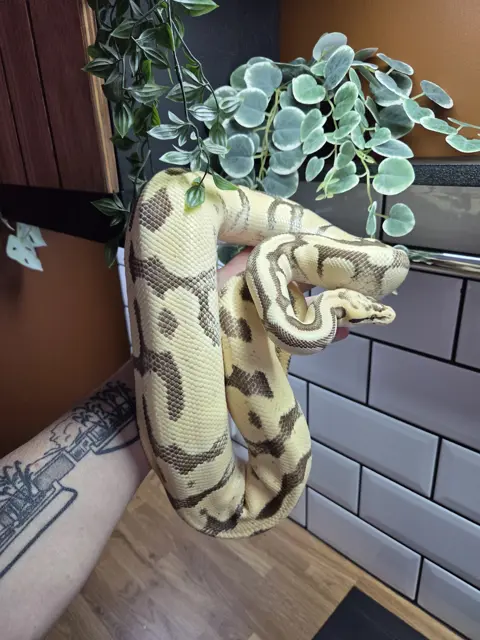
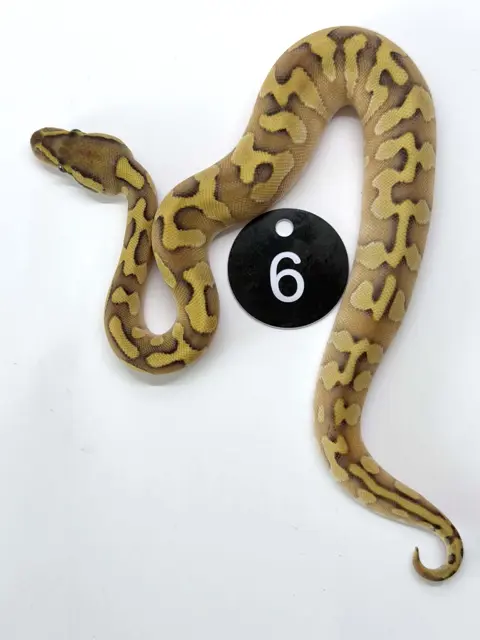
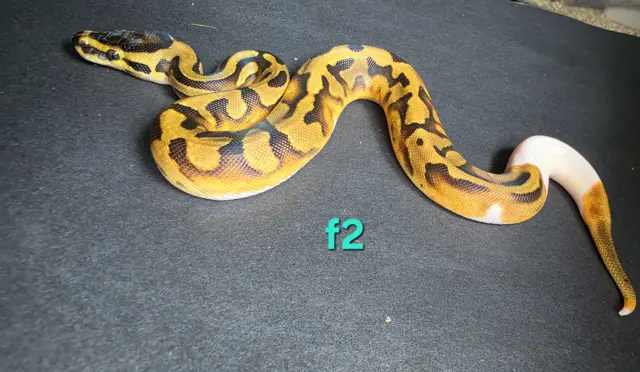
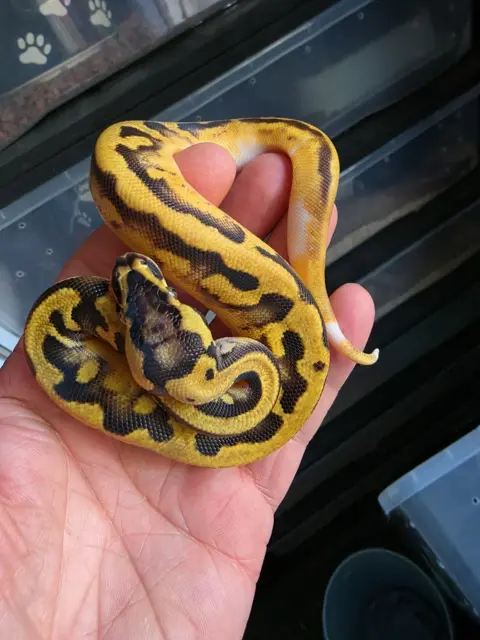


Enchi clown


Axanthic enchi ghi
About the Enchi gene
The Enchi gene affects both colour and pattern in the royal python (ball python). It produces a cleaner, reduced pattern with softer chocolate markings and more gold and orange along the sides. This gene turns up in a very large number of named combinations and improves as the snake ages.
Appearance
The Enchi morph features a pattern that is greatly reduced, where alien heads flatten into plain, featureless shapes. These alien heads have a copper or bronze tone and are faded. The sides are golden-yellow, and the dark pigment reads as chocolate rather than black. While the head looks much like a normal's, it has brighter yellow through the eye stripes and a heavily blushed crown. The tail usually finishes in beading or a thick stripe in the Enchi's gold.
When you buy one, age matters. A plain hatchling can grow into a far brighter adult because oranges and yellows get markedly brighter as the snake matures. It can also be hard to pick a newly hatched Enchi from a normal.
Super Enchi takes both effects further. The colour becomes more intense and lighter as the dark fields shrink. The head also carries a distinctive pattern of its own. These Supers hatch light beige with dark dots and turn yellow over their first sheds, as the dots go brown.
Genetics
Enchi is incomplete dominant: one copy gives the Enchi look, while two copies produce Super Enchi, a visibly different animal. Co-dom, still used in many listings, is a looser label for the same thing. It is usually part of the 8 Ball complex and is allelic with Cinnamon, Black Pastel, Huffman, Jolt, Razor and Het Red Axanthic, but not every genetics calculator treats it as sharing their locus. A genetic test is available for it. Combinations with specific names include Aquila (Enchi and Bamboo), Stinger Bee (Enchi and Spider) and Frostbite (Enchi, Cinnamon and Pastel). In 2002, Lars Brandell of Sweball in Sweden proved it out from a pair imported from Ghana in 1998. The first Super Enchis hatched in 2003. The name comes from the Enchi area of Ghana.