

Extreme Harlequin Crested Geckos for sale in the UK
Most of the body is covered by lateral markings that often reach the back stripe on Extreme Harlequin crested geckos with the heaviest harlequin patterning.
- Visuals
- £90
- 3 for sale
Extreme Harlequin crested geckos available now
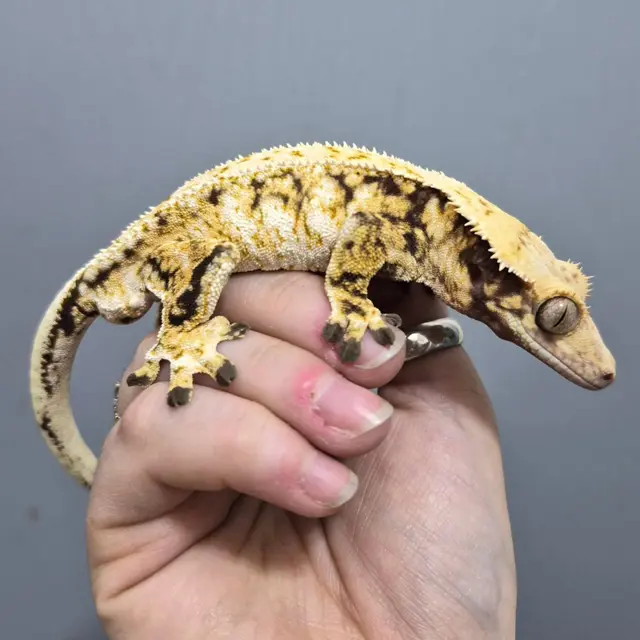
Extreme Tricolour


About the Extreme Harlequin gene
The name Harlequin is used for a crested gecko when pale markings from the belly and sides move towards the back. Extreme Harlequin is the furthest point on that scale. This name describes a level of coverage instead of one fixed look because no single inherited factor is behind it. Breeders reach that point by mating the most heavily patterned Harlequins over successive generations. A keeper buys one for the density of its markings, as the pattern usually dominates the base colour and not the other way round.
Appearance
The distance the lighter pattern reaches up the sides is what makes it different. For an Extreme Harlequin, there is roughly 75 to 80 percent coverage of the upper laterals where the markings join or crowd right against the dorsal stripe. Most of the pattern on a standard Harlequin stays on the tail, legs and lower sides. Because an Extreme Harlequin carries the pattern onto the head, neck and sometimes the belly too, there is little base colour showing on the flanks. The pattern runs from paper white and cream through to deep orange, while the base colours range from black and dark brown through red and orange to yellow. Animals taken further still, where the dorsal and lateral pattern meet all the way along the body, are sold as full coverage.
Genetics
Instead of being a single dominant or recessive factor, Extreme Harlequin is polygenic. Breeders create the look over generations by pairing and selecting animals with heavy patterns rather than combining two copies of one gene. This morph is listed as both Extreme Harlequin and Pos Extreme Harlequin. The line comes from Flame. Because breeders chose Flames with more pattern on the belly and limbs, Harlequin was first described in specimens from around 2000. Extreme Harlequin is that same lineage taken further. For the Extreme grade itself, no single year or originator is recorded.