

Piebald Chameleons for sale in the UK
Piebald veiled chameleons lose their normal colour in patches of black, white and pink, mostly on the tail and toes and, in the heaviest animals, across the limbs and head. The trait sells under several names and some lines were inbred hard, so buy on the parents.
- Visuals
- £80
- 2 for sale
Piebald chameleons available now
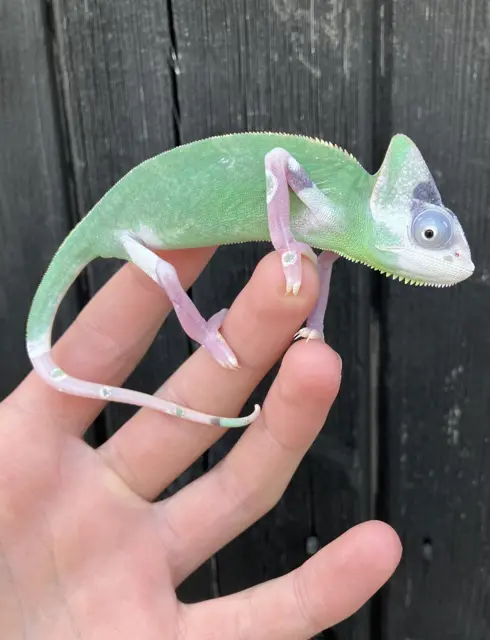
Pied females
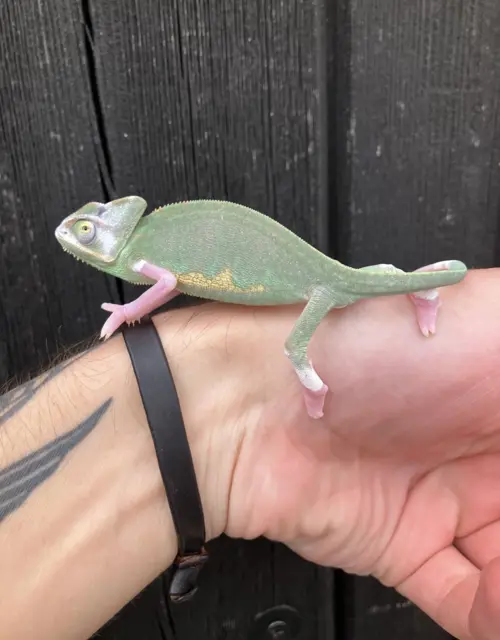
Pied males
About the Piebald gene
The veiled chameleon (Chamaeleo calyptratus) has a colour trait called Piebald. This means that black and normal colour are seen alongside pink or white where skin patches lose their pigment. These animals are sold as translucent in the US, while in the UK they are usually sold as pied or piebald.
Appearance
Pink shows where skin lacks pigment, while white and black replace the usual bands, yellows and greens. This patching appears most often on the tail's back half and the toes. Heavier animals carry it across the head and all four limbs. Those marked most heavily are close to white-headed. No two animals are patched alike. The trade grades them from low end, little more than pink feet, up to high end.
Genetics
You will see it listed as Piebald and Het Piebald, with Translucent and Het Translucent listed separately. Most of the trade calls the same patchy animals piebald, pied, translucent or transbald, the European contraction, though some keepers reserve piebald for an animal patched over the whole body rather than just the feet, head and limbs. The inheritance is disputed: breeders have sold and bred it as recessive, as codominant and as dominant. Judge an animal on what it and its parents look like, not on the name.
Known issues
Some piebald lines have been inbred heavily, and that inbreeding has been linked to poor health in the animals it produced. The concern is with the inbreeding instead of the patches. Ask the seller when the line was last outcrossed and how it was built.